

For centuries, only states have been the only subjects of international law. States sign and ratify treaties, and are bound by the same. Their dédoublement fonctionnel means that they are both the makers and main subjects of international law. Traditionally, non-state actors formally played little if any role in the making and shaping of international law. However, this has not always been the case. In fact, early modern sources tell a different story in which different civilizations played a significant role in international relations. Indigenous nations did have sovereignty, autonomy, and enjoyed international recognition. Treaties were signed between indigenous nations and early modern states.
Despite this formal recognition, war, pandemics, and oppression have followed since, and the time has come to investigate the inherent rights of Indigenous Peoples. Several years ago, Professor Antonietta Di Blase invited me to contribute a paper on the rights of Indigenous Peoples at a workshop she organized at the University of Rome III. I cherished the opportunity to discuss some of my research in such an exciting venue. In particular, I focused on the protection of Indigenous identity and heritage in international investment law and arbitration, identifying a range of arbitral awards dealing with important Indigenous issues.
When Professor Di Blase recently invited me to co-edit the book with her, I had no hesitation, as this was the right thing to do. Not only has she been a formidable mentor, and I have had the honor to collaborate with her for more than a decade, but the topic could not be timelier or more topical. Moreover, the edited collection harmoniously covered essential aspects of international law.
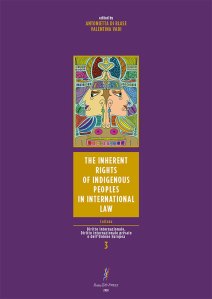
This book highlights the cogency and urgency of the protection of Indigenous Peoples and discusses crucial aspects of the international legal theory and practice relating to their rights. These rights are not established by states; rather, they are inherent to indigenous peoples because of their human dignity, historical continuity, cultural distinctiveness, and connection to the lands where they have lived from time immemorial. In the past decades, a new awareness of the importance of indigenous rights has emerged at the international level. UN organs have adopted specific international law instruments that protect Indigenous peoples. Nonetheless, concerns persist because of continued widespread breaches of such rights.
The volume includes contributions by distinguished scholars and practitioners. It is divided into three parts. Part I introduces the main themes and challenges to be addressed, considering the debate on self-determination of Indigenous Peoples and the theoretical origins of ‘indigenous sovereignty.’ Parts II and III explore the protection of Indigenous Peoples afforded under the international law rules on human rights and investments, respectively. Not only do the contributors to this book critically assess the current international legal framework, but they also suggest ways and methods to utilize such legal instruments towards the protection, promotion, and fulfillment of Indigenous Peoples’ rights, to contribute to the maintenance of peace and the pursuit of justice in international relations. The book will hopefully start an academic debate on the urgency of enhancing the existing legal framework and/or better implementing it, to foster the protection, fulfillment, and realization of the inherent rights of Indigenous Peoples.
Published by the University of Rome III Press, the edited volume is available open access at http://romatrepress.uniroma3.it/libro/the-inherent-rights-of-indigenous-peoples-in-international-law/. Copies can also be printed on-demand at the same website. It is also available here:
BOOK – The-Inherent-Rights-of-Indigenous-Peoples-in-International-Law-1

 Valentina Vadi