

 My current research on global governance is composed of three research strands. The first strand studies the interaction between cultural heritage and the market and explores how international economic law governs this interaction. This project was awarded a European Research Council Starting Grant (HERITAGE, 639564, 2015-2018). Its primary outcome is Cultural Heritage in International Economic Law (Leiden: Brill 2023). Not only does the book offer the most updated examination of the existing and emerging jurisprudence, but it also provides a useful conceptual framework for reconciling the opposing interests at stake. Therefore, while new cases may arise in the future, the theoretical framework offered in the book may be of help to both practitioners and scholars alike who are interested in the interplay between cultural heritage and the rights of traders and investors in international economic law.
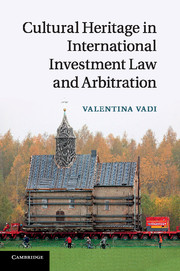 The book builds upon and further develops my previous research on the protection of cultural heritage. My book Cultural Heritage in International Investment Law and Arbitration (Cambridge University Press 2014) focused on the interplay between the protection of cultural heritage and the promotion of foreign direct investment in international investment law and arbitration. This book demonstrates how legitimate concerns for the protection of the cultural heritage or cultural identity of a host state may lead to limitations on transnational economic activity, which are then adjudicated by arbitral tribunals or other courts where such investment disputes are settled. In exploring the interplay between the protection of cultural heritage and the promotion of foreign direct investments, the book aims to contribute to the ongoing debate on the need for ‘globalization with a human face’ (Stiglitz). The protean nature of international investment law and arbitration and the political and legal dilemmas raised when the arbitration of investment disputes ‘clashes’ with policy objectives of the host state make it an intriguing topic to explore and put it at the forefront of legal debate.

The second research strand explores a distinct, albeit related, aspect of global economic governance, addressing the question of whether the migration of constitutional ideas – such as proportionality, reasonableness, and deference – from the domestic to the international realm can contribute to the evolution of international investment law and arbitration. International investment law and arbitration play a dynamic role in international law. In the same way that Renaissance architects looked for the perfect proportions to finalize their buildings, arbitrators attempt to create order out of the existing chaos, systematize the field, and enhance the perceived legitimacy of international investment law. The comprehensive monograph Proportionality, Reasonableness, and Standards of Review in International Investment Law and Arbitration (Cheltenham: Edward Elgar 2018) examines the role that the concepts of proportionality and reasonableness, on the one hand, and standards of review, on the other, can play in devising the new architecture of international investment law.
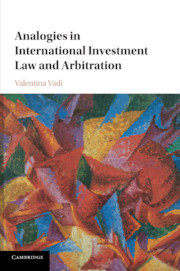 The project builds upon and develops earlier research conducted during an Emile Noel Fellowship at New York University, where I investigated the role of comparative reasoning in international investment law and arbitration. The main outcome of the research conducted during this fellowship was published by Cambridge University Press. See Valentina Vadi, Analogies in International Investment Law and Arbitration (Cambridge University Press 2016). The book cover, depicting Umberto Boccioni’s Dimensional Shapes of a Horse, synthetises the difficulty of capturing the essence and dynamism of investor-state arbitration.

The project also builds upon and develops earlier research focused on international investment law and arbitration as a tool of global governance and its interplay with public policy objectives. In particular, I have investigated the interaction between international investment law and public health. My first book, Public Health in International Investment Law and Arbitration (London: Routledge 2012) proposed various legal tools for reconciling private economic interests and public health objectives.
 A third research strand focuses on the history and theory of international law. The history of international law has recently come to the forefront of legal debate. Broadly defined as the field of study that examines the evolution of public international law and investigates state practice, the development of given legal concepts and theories, and the life and work of its makers, the history of international law has attracted growing attention in recent years. Despite this flourishing, the history of international law is still in search of a proper methodology. I investigated some methodological issues in 1) V. Vadi, ‘International Law and its Histories: Methodological Risks and Opportunities’, 58(2) Harvard International Law Journal (2017) 311–352; 2) V. Vadi, ‘The Power of Scale: International Law and Microhistories’, Denver Journal of International Law and Policy (2018); and 3) V. Vadi, ‘Perspective and Scale in the Architecture of International Legal History,’ European Journal of International Law (2019).

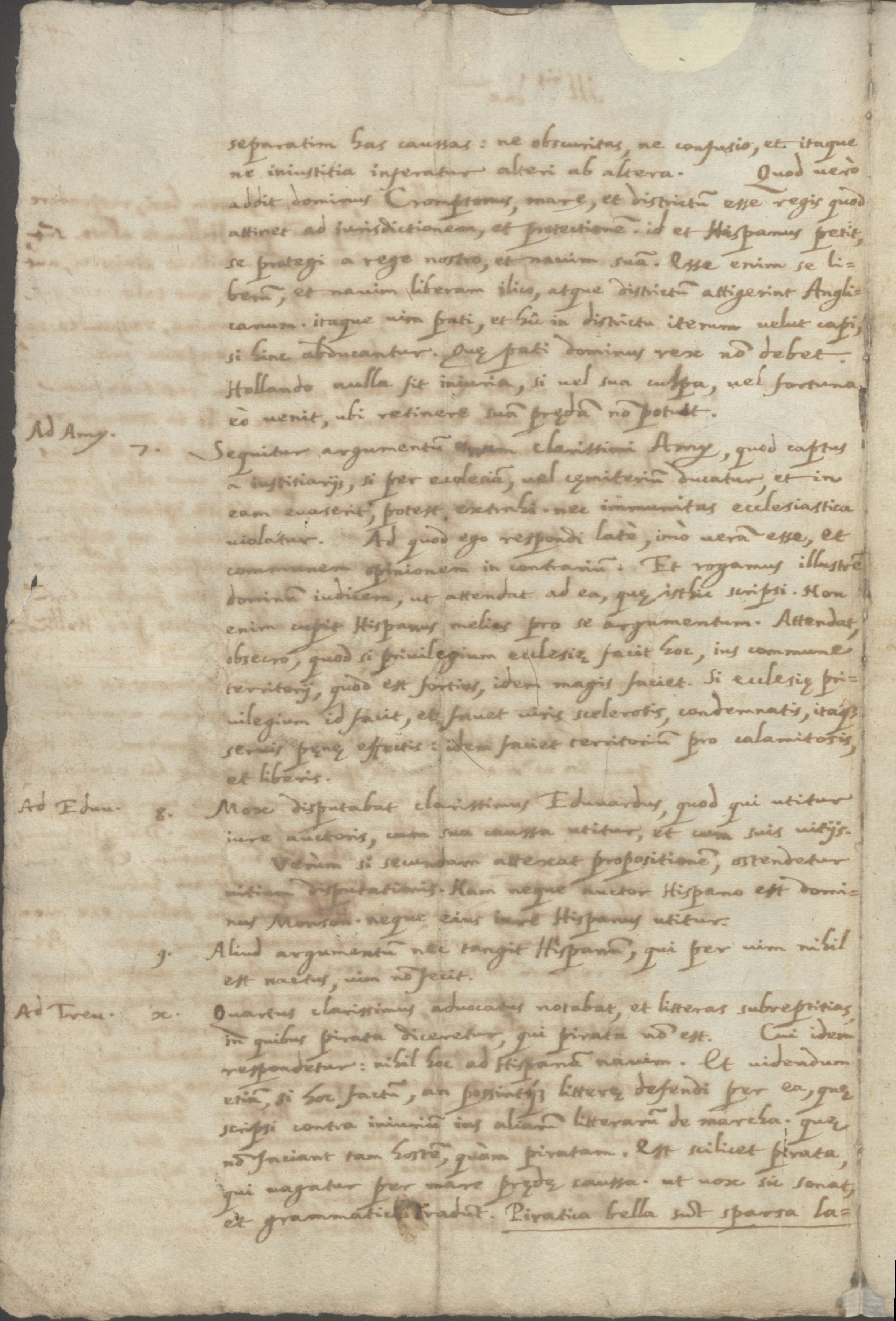
I then focused on the contribution of Alberico Gentili (1552-1608), a religious refugee and a Regius Professor at the University of Oxford, to the development of early-modern international law. War and Peace – Alberico Gentili and the Early Modern Law of Nations (Brill 2020) investigates the life and work of Gentili. A Protestant who lived in exile and Regius Professor of Civil Law at the University of Oxford, Gentili was a leading scholar and contributed substantively to the development of international law. He was a pivotal thinker and contributed to the emergence of the law of nations as an autonomous discipline. The book examines Gentili’s contribution to the theory of international law. It attempts to overcome his renowned obscurity by shedding some light on this enigmatic scholar, exploring his enduring legacy, and critically assessing his approach. The project was awarded a Michigan Grotius Research Fellowship (2019) at the Law School of the University of Michigan, United States.
 Valentina Vadi